|
LSSTApplications
8.0.0.0+107,8.0.0.1+13,9.1+18,9.2,master-g084aeec0a4,master-g0aced2eed8+6,master-g15627eb03c,master-g28afc54ef9,master-g3391ba5ea0,master-g3d0fb8ae5f,master-g4432ae2e89+36,master-g5c3c32f3ec+17,master-g60f1e072bb+1,master-g6a3ac32d1b,master-g76a88a4307+1,master-g7bce1f4e06+57,master-g8ff4092549+31,master-g98e65bf68e,master-ga6b77976b1+53,master-gae20e2b580+3,master-gb584cd3397+53,master-gc5448b162b+1,master-gc54cf9771d,master-gc69578ece6+1,master-gcbf758c456+22,master-gcec1da163f+63,master-gcf15f11bcc,master-gd167108223,master-gf44c96c709
LSSTDataManagementBasePackage
|
Public Member Functions | |
| def | __init__ |
| def | set |
| def | pushSize |
| def | popSize |
| def | flush |
Private Member Functions | |
| def | _getSize |
Private Attributes | |
| _commands | |
| _lenCommands | |
| _bufsize | |
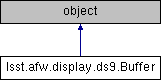
Control buffering the sending of commands to ds9;
annoying but necessary for anything resembling performance
The usual usage pattern (from a module importing this file, ds9.py) is probably:
with ds9.Buffering():
# bunches of ds9.{dot,line} commands
ds9.flush()
# bunches more ds9.{dot,line} commands
or (if you don't like "with")
ds9.buffer()
# bunches of ds9.{dot,line} commands
ds9.flush()
# bunches more ds9.{dot,line} commands
ds9.buffer(False)
or (the old idiom):
ds9.cmdBuffer.pushSize()
# bunches of ds9.{dot,line} commands
ds9.cmdBuffer.flush()
# bunches more ds9.{dot,line} commands
ds9.cmdBuffer.popSize()
|
private |
Get the current ds9 buffer size
| def lsst.afw.display.ds9.Buffer.flush | ( | self, | |
silent = True |
|||
| ) |
Flush the pending commands
Definition at line 307 of file ds9.py.
| def lsst.afw.display.ds9.Buffer.popSize | ( | self | ) |
| def lsst.afw.display.ds9.Buffer.pushSize | ( | self, | |
size = -1 |
|||
| ) |
| def lsst.afw.display.ds9.Buffer.set | ( | self, | |
| size, | |||
silent = True |
|||
| ) |
1.8.5