LSST Applications g00274db5b6+edbf708997,g00d0e8bbd7+edbf708997,g199a45376c+5137f08352,g1fd858c14a+1d4b6db739,g262e1987ae+f4d9505c4f,g29ae962dfc+7156fb1a53,g2cef7863aa+73c82f25e4,g35bb328faa+edbf708997,g3e17d7035e+5b3adc59f5,g3fd5ace14f+852fa6fbcb,g47891489e3+6dc8069a4c,g53246c7159+edbf708997,g64539dfbff+9f17e571f4,g67b6fd64d1+6dc8069a4c,g74acd417e5+ae494d68d9,g786e29fd12+af89c03590,g7ae74a0b1c+a25e60b391,g7aefaa3e3d+536efcc10a,g7cc15d900a+d121454f8d,g87389fa792+a4172ec7da,g89139ef638+6dc8069a4c,g8d7436a09f+28c28d8d6d,g8ea07a8fe4+db21c37724,g92c671f44c+9f17e571f4,g98df359435+b2e6376b13,g99af87f6a8+b0f4ad7b8d,gac66b60396+966efe6077,gb88ae4c679+7dec8f19df,gbaa8f7a6c5+38b34f4976,gbf99507273+edbf708997,gc24b5d6ed1+9f17e571f4,gca7fc764a6+6dc8069a4c,gcc769fe2a4+97d0256649,gd7ef33dd92+6dc8069a4c,gdab6d2f7ff+ae494d68d9,gdbb4c4dda9+9f17e571f4,ge410e46f29+6dc8069a4c,geaed405ab2+e194be0d2b,w.2025.47
LSST Data Management Base Package
Loading...
Searching...
No Matches
lsst.dax.apdb.sql.apdbSql.ApdbSql Class Reference
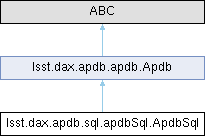
Inheritance diagram for lsst.dax.apdb.sql.apdbSql.ApdbSql:
lsst.dax.apdb.apdb.Apdb

Public Member Functions

 __init__ (self, ApdbSqlConfig config)
 
VersionTuple apdbImplementationVersion (cls)
 
ApdbSqlConfig init_database (cls, str db_url, *, str|None schema_file=None, str|None ss_schema_file=None, int|None read_sources_months=None, int|None read_forced_sources_months=None, bool enable_replica=False, int|None connection_timeout=None, str|None dia_object_index=None, int|None htm_level=None, str|None htm_index_column=None, tuple[str, str]|None ra_dec_columns=None, str|None prefix=None, str|None namespace=None, bool drop=False)
 
ApdbSqlReplica get_replica (self)
 
dict[str, int] tableRowCount (self)
 
ApdbSqlConfig getConfig (self)
 
Table|None tableDef (self, ApdbTables table)
 
pandas.DataFrame getDiaObjects (self, Region region)
 
pandas.DataFrame|None getDiaSources (self, Region region, Iterable[int]|None object_ids, astropy.time.Time visit_time, astropy.time.Time|None start_time=None)
 
pandas.DataFrame|None getDiaForcedSources (self, Region region, Iterable[int]|None object_ids, astropy.time.Time visit_time, astropy.time.Time|None start_time=None)
 
bool containsVisitDetector (self, int visit, int detector, Region region, astropy.time.Time visit_time)
 
None store (self, astropy.time.Time visit_time, pandas.DataFrame objects, pandas.DataFrame|None sources=None, pandas.DataFrame|None forced_sources=None)
 
None reassignDiaSources (self, Mapping[int, int] idMap)
 
None dailyJob (self)
 
int countUnassociatedObjects (self)
 
ApdbMetadata metadata (self)
 
ApdbSqlAdmin admin (self)
 
Apdb from_config (cls, ApdbConfig config)
 
Apdb from_uri (cls, ResourcePathExpression uri)
 

Public Attributes

 config = freezer.update(config, config_json)
 
 pixelator = HtmPixelization(self.config.pixelization.htm_level)
 

Static Public Attributes

str metadataSchemaVersionKey = "version:schema"
 
str metadataCodeVersionKey = "version:ApdbSql"
 
str metadataReplicaVersionKey = "version:ApdbSqlReplica"
 
str metadataConfigKey = "config:apdb-sql.json"
 

Protected Member Functions

Timer _timer (self, str name, *, Mapping[str, str|int]|None tags=None)
 
sqlalchemy.engine.Engine _makeEngine (cls, ApdbSqlConfig config, *, bool create)
 
sqlalchemy.engine.URL|str _connection_url (cls, str config_url, *, bool create)
 
str _update_sqlite_url (cls, str url_string)
 
VersionTuple _versionCheck (self, ApdbMetadataSql metadata)
 
None _makeSchema (cls, ApdbConfig config, bool drop=False)
 
pandas.DataFrame _getDiaSourcesInRegion (self, Region region, float start_time_mjdTai)
 
pandas.DataFrame _getDiaSourcesByIDs (self, list[int] object_ids, float start_time_mjdTai)
 
pandas.DataFrame _getSourcesByIDs (self, ApdbTables table_enum, list[int] object_ids, float midpointMjdTai_start)
 
None _storeReplicaChunk (self, ReplicaChunk replica_chunk, sqlalchemy.engine.Connection connection)
 
None _storeDiaObjects (self, pandas.DataFrame objs, astropy.time.Time visit_time, ReplicaChunk|None replica_chunk, sqlalchemy.engine.Connection connection)
 
None _storeDiaSources (self, pandas.DataFrame sources, ReplicaChunk|None replica_chunk, sqlalchemy.engine.Connection connection)
 
None _storeDiaForcedSources (self, pandas.DataFrame sources, ReplicaChunk|None replica_chunk, sqlalchemy.engine.Connection connection)
 
None _storeUpdateRecords (self, Iterable[ApdbUpdateRecord] records, ReplicaChunk chunk, *, bool store_chunk=False, sqlalchemy.engine.Connection|None connection=None)
 
list[tuple[int, int]] _htm_indices (self, Region region)
 
sql.ColumnElement _filterRegion (self, sqlalchemy.schema.Table table, Region region)
 
pandas.DataFrame _add_spatial_index (self, pandas.DataFrame df)
 
pandas.DataFrame _fix_input_timestamps (self, pandas.DataFrame df)
 
pandas.DataFrame _fix_result_timestamps (self, pandas.DataFrame df)
 

Protected Attributes

sqlalchemy.engine.Engine _engine = self._makeEngine(config, create=False)
 
 _metadata = ApdbMetadataSql(self._engine, meta_table)
 
 _schema
 
VersionTuple _db_schema_version = self._versionCheck(self._metadata)
 

Static Protected Attributes

tuple _frozen_parameters
 

Detailed Description

Implementation of APDB interface based on SQL database.

The implementation is configured via standard ``pex_config`` mechanism
using `ApdbSqlConfig` configuration class. For an example of different
configurations check ``config/`` folder.

Parameters
----------
config : `ApdbSqlConfig`
    Configuration object.

Definition at line 118 of file apdbSql.py.

Constructor & Destructor Documentation

◆ __init__()

lsst.dax.apdb.sql.apdbSql.ApdbSql.__init__ ( self,
ApdbSqlConfig config )

Definition at line 152 of file apdbSql.py.

152 def __init__(self, config: ApdbSqlConfig):
153 self._engine = self._makeEngine(config, create=False)
154
155 sa_metadata = sqlalchemy.MetaData(schema=config.namespace)
156 meta_table_name = ApdbTables.metadata.table_name(prefix=config.prefix)
157 meta_table = sqlalchemy.schema.Table(meta_table_name, sa_metadata, autoload_with=self._engine)
158 self._metadata = ApdbMetadataSql(self._engine, meta_table)
159
160 # Read frozen config from metadata.
161 config_json = self._metadata.get(self.metadataConfigKey)
162 if config_json is not None:
163 # Update config from metadata.
164 freezer = ApdbConfigFreezer[ApdbSqlConfig](self._frozen_parameters)
165 self.config = freezer.update(config, config_json)
166 else:
167 self.config = config
168
169 self._schema = ApdbSqlSchema(
170 engine=self._engine,
171 dia_object_index=self.config.dia_object_index,
172 schema_file=self.config.schema_file,
173 ss_schema_file=self.config.ss_schema_file,
174 prefix=self.config.prefix,
175 namespace=self.config.namespace,
176 htm_index_column=self.config.pixelization.htm_index_column,
177 enable_replica=self.config.enable_replica,
178 )
179
180 self._db_schema_version = self._versionCheck(self._metadata)
181
182 self.pixelator = HtmPixelization(self.config.pixelization.htm_level)
183
184 if _LOG.isEnabledFor(logging.DEBUG):
185 _LOG.debug("ApdbSql Configuration: %s", self.config.model_dump())
186

Member Function Documentation

◆ _add_spatial_index()

pandas.DataFrame lsst.dax.apdb.sql.apdbSql.ApdbSql._add_spatial_index ( self,
pandas.DataFrame df )
protected
Calculate spatial index for each record and add it to a DataFrame.

Parameters
----------
df : `pandas.DataFrame`
    DataFrame which has to contain ra/dec columns, names of these
    columns are defined by configuration ``ra_dec_columns`` field.

Returns
-------
df : `pandas.DataFrame`
    DataFrame with ``pixelId`` column which contains pixel index
    for ra/dec coordinates.

Notes
-----
This overrides any existing column in a DataFrame with the same name
(pixelId). Original DataFrame is not changed, copy of a DataFrame is
returned.

Definition at line 1204 of file apdbSql.py.

1204 def _add_spatial_index(self, df: pandas.DataFrame) -> pandas.DataFrame:
1205 """Calculate spatial index for each record and add it to a DataFrame.
1206
1207 Parameters
1208 ----------
1209 df : `pandas.DataFrame`
1210 DataFrame which has to contain ra/dec columns, names of these
1211 columns are defined by configuration ``ra_dec_columns`` field.
1212
1213 Returns
1214 -------
1215 df : `pandas.DataFrame`
1216 DataFrame with ``pixelId`` column which contains pixel index
1217 for ra/dec coordinates.
1218
1219 Notes
1220 -----
1221 This overrides any existing column in a DataFrame with the same name
1222 (pixelId). Original DataFrame is not changed, copy of a DataFrame is
1223 returned.
1224 """
1225 # calculate HTM index for every DiaObject
1226 htm_index = np.zeros(df.shape[0], dtype=np.int64)
1227 ra_col, dec_col = self.config.ra_dec_columns
1228 for i, (ra, dec) in enumerate(zip(df[ra_col], df[dec_col])):
1229 uv3d = UnitVector3d(LonLat.fromDegrees(ra, dec))
1230 idx = self.pixelator.index(uv3d)
1231 htm_index[i] = idx
1232 df = df.copy()
1233 df[self.config.pixelization.htm_index_column] = htm_index
1234 return df
1235

◆ _connection_url()

sqlalchemy.engine.URL | str lsst.dax.apdb.sql.apdbSql.ApdbSql._connection_url ( cls,
str config_url,
* ,
bool create )
protected
Generate a complete URL for database with proper credentials.

Parameters
----------
config_url : `str`
    Database URL as specified in configuration.
create : `bool`
    Whether to try to create new database file, only relevant for
    SQLite backend which always creates new files by default.

Returns
-------
connection_url : `sqlalchemy.engine.URL` or `str`
    Connection URL including credentials.

Definition at line 229 of file apdbSql.py.

229 def _connection_url(cls, config_url: str, *, create: bool) -> sqlalchemy.engine.URL | str:
230 """Generate a complete URL for database with proper credentials.
231
232 Parameters
233 ----------
234 config_url : `str`
235 Database URL as specified in configuration.
236 create : `bool`
237 Whether to try to create new database file, only relevant for
238 SQLite backend which always creates new files by default.
239
240 Returns
241 -------
242 connection_url : `sqlalchemy.engine.URL` or `str`
243 Connection URL including credentials.
244 """
245 # Allow 3rd party authentication mechanisms by assuming connection
246 # string is correct when we can not recognize (dialect, host, database)
247 # matching keys.
248 components = urllib.parse.urlparse(config_url)
249 if all((components.scheme is not None, components.hostname is not None, components.path is not None)):
250 try:
251 db_auth = DbAuth()
252 config_url = db_auth.getUrl(config_url)
253 except DbAuthNotFoundError:
254 # Credentials file doesn't exist or no matching credentials,
255 # use default auth.
256 pass
257
258 # SQLite has a nasty habit creating empty databases when they do not
259 # exist, tell it not to do that unless we do need to create it.
260 if not create:
261 config_url = cls._update_sqlite_url(config_url)
262
263 return config_url
264

◆ _filterRegion()

sql.ColumnElement lsst.dax.apdb.sql.apdbSql.ApdbSql._filterRegion ( self,
sqlalchemy.schema.Table table,
Region region )
protected
Make SQLAlchemy expression for selecting records in a region.

Definition at line 1190 of file apdbSql.py.

1190 def _filterRegion(self, table: sqlalchemy.schema.Table, region: Region) -> sql.ColumnElement:
1191 """Make SQLAlchemy expression for selecting records in a region."""
1192 htm_index_column = table.columns[self.config.pixelization.htm_index_column]
1193 exprlist = []
1194 pixel_ranges = self._htm_indices(region)
1195 for low, upper in pixel_ranges:
1196 upper -= 1
1197 if low == upper:
1198 exprlist.append(htm_index_column == low)
1199 else:
1200 exprlist.append(sql.expression.between(htm_index_column, low, upper))
1201
1202 return sql.expression.or_(*exprlist)
1203

◆ _fix_input_timestamps()

pandas.DataFrame lsst.dax.apdb.sql.apdbSql.ApdbSql._fix_input_timestamps ( self,
pandas.DataFrame df )
protected
Update timestamp columns in input DataFrame to be aware datetime
type in in UTC.

AP pipeline generates naive datetime instances, we want them to be
aware before they go to database. All naive timestamps are assumed to
be in UTC timezone (they should be TAI).

Definition at line 1236 of file apdbSql.py.

1236 def _fix_input_timestamps(self, df: pandas.DataFrame) -> pandas.DataFrame:
1237 """Update timestamp columns in input DataFrame to be aware datetime
1238 type in in UTC.
1239
1240 AP pipeline generates naive datetime instances, we want them to be
1241 aware before they go to database. All naive timestamps are assumed to
1242 be in UTC timezone (they should be TAI).
1243 """
1244 # Find all columns with aware non-UTC timestamps and convert to UTC.
1245 columns = [
1246 column
1247 for column, dtype in df.dtypes.items()
1248 if isinstance(dtype, pandas.DatetimeTZDtype) and dtype.tz is not datetime.UTC
1249 ]
1250 for column in columns:
1251 df[column] = df[column].dt.tz_convert(datetime.UTC)
1252 # Find all columns with naive timestamps and add UTC timezone.
1253 columns = [
1254 column for column, dtype in df.dtypes.items() if pandas.api.types.is_datetime64_dtype(dtype)
1255 ]
1256 for column in columns:
1257 df[column] = df[column].dt.tz_localize(datetime.UTC)
1258 return df
1259

◆ _fix_result_timestamps()

pandas.DataFrame lsst.dax.apdb.sql.apdbSql.ApdbSql._fix_result_timestamps ( self,
pandas.DataFrame df )
protected
Update timestamp columns to be naive datetime type in returned
DataFrame.

AP pipeline code expects DataFrames to contain naive datetime columns,
while Postgres queries return timezone-aware type. This method converts
those columns to naive datetime in UTC timezone.

Definition at line 1260 of file apdbSql.py.

1260 def _fix_result_timestamps(self, df: pandas.DataFrame) -> pandas.DataFrame:
1261 """Update timestamp columns to be naive datetime type in returned
1262 DataFrame.
1263
1264 AP pipeline code expects DataFrames to contain naive datetime columns,
1265 while Postgres queries return timezone-aware type. This method converts
1266 those columns to naive datetime in UTC timezone.
1267 """
1268 # Find all columns with aware timestamps.
1269 columns = [column for column, dtype in df.dtypes.items() if isinstance(dtype, pandas.DatetimeTZDtype)]
1270 for column in columns:
1271 # tz_convert(None) will convert to UTC and drop timezone.
1272 df[column] = df[column].dt.tz_convert(None)
1273 return df

◆ _getDiaSourcesByIDs()

pandas.DataFrame lsst.dax.apdb.sql.apdbSql.ApdbSql._getDiaSourcesByIDs ( self,
list[int] object_ids,
float start_time_mjdTai )
protected
Return catalog of DiaSource instances given set of DiaObject IDs.

Parameters
----------
object_ids :
    Collection of DiaObject IDs
start_time_mjdTai : `float`
    Lower bound of time window for the query.

Returns
-------
catalog : `pandas.DataFrame`
    Catalog containing DiaSource records.

Definition at line 784 of file apdbSql.py.

784 def _getDiaSourcesByIDs(self, object_ids: list[int], start_time_mjdTai: float) -> pandas.DataFrame:
785 """Return catalog of DiaSource instances given set of DiaObject IDs.
786
787 Parameters
788 ----------
789 object_ids :
790 Collection of DiaObject IDs
791 start_time_mjdTai : `float`
792 Lower bound of time window for the query.
793
794 Returns
795 -------
796 catalog : `pandas.DataFrame`
797 Catalog containing DiaSource records.
798 """
799 with self._timer("select_time", tags={"table": "DiaSource"}) as timer:
800 sources = self._getSourcesByIDs(ApdbTables.DiaSource, object_ids, start_time_mjdTai)
801 timer.add_values(row_count=len(sources))
802
803 _LOG.debug("found %s DiaSources", len(sources))
804 return sources
805

◆ _getDiaSourcesInRegion()

pandas.DataFrame lsst.dax.apdb.sql.apdbSql.ApdbSql._getDiaSourcesInRegion ( self,
Region region,
float start_time_mjdTai )
protected
Return catalog of DiaSource instances from given region.

Parameters
----------
region : `lsst.sphgeom.Region`
    Region to search for DIASources.
start_time_mjdTai : `float`
    Lower bound of time window for the query.

Returns
-------
catalog : `pandas.DataFrame`
    Catalog containing DiaSource records.

Definition at line 752 of file apdbSql.py.

752 def _getDiaSourcesInRegion(self, region: Region, start_time_mjdTai: float) -> pandas.DataFrame:
753 """Return catalog of DiaSource instances from given region.
754
755 Parameters
756 ----------
757 region : `lsst.sphgeom.Region`
758 Region to search for DIASources.
759 start_time_mjdTai : `float`
760 Lower bound of time window for the query.
761
762 Returns
763 -------
764 catalog : `pandas.DataFrame`
765 Catalog containing DiaSource records.
766 """
767 table = self._schema.get_table(ApdbTables.DiaSource)
768 columns = self._schema.get_apdb_columns(ApdbTables.DiaSource)
769 query = sql.select(*columns)
770
771 # build selection
772 time_filter = table.columns["midpointMjdTai"] > start_time_mjdTai
773 where = sql.expression.and_(self._filterRegion(table, region), time_filter)
774 query = query.where(where)
775
776 # execute select
777 with self._timer("DiaSource_select_time", tags={"table": "DiaSource"}) as timer:
778 with self._engine.begin() as conn:
779 sources = pandas.read_sql_query(query, conn)
780 timer.add_values(row_counts=len(sources))
781 _LOG.debug("found %s DiaSources", len(sources))
782 return self._fix_result_timestamps(sources)
783

◆ _getSourcesByIDs()

pandas.DataFrame lsst.dax.apdb.sql.apdbSql.ApdbSql._getSourcesByIDs ( self,
ApdbTables table_enum,
list[int] object_ids,
float midpointMjdTai_start )
protected
Return catalog of DiaSource or DiaForcedSource instances given set
of DiaObject IDs.

Parameters
----------
table : `sqlalchemy.schema.Table`
    Database table.
object_ids :
    Collection of DiaObject IDs
midpointMjdTai_start : `float`
    Earliest midpointMjdTai to retrieve.

Returns
-------
catalog : `pandas.DataFrame`
    Catalog contaning DiaSource records. `None` is returned if
    ``read_sources_months`` configuration parameter is set to 0 or
    when ``object_ids`` is empty.

Definition at line 806 of file apdbSql.py.

808 ) -> pandas.DataFrame:
809 """Return catalog of DiaSource or DiaForcedSource instances given set
810 of DiaObject IDs.
811
812 Parameters
813 ----------
814 table : `sqlalchemy.schema.Table`
815 Database table.
816 object_ids :
817 Collection of DiaObject IDs
818 midpointMjdTai_start : `float`
819 Earliest midpointMjdTai to retrieve.
820
821 Returns
822 -------
823 catalog : `pandas.DataFrame`
824 Catalog contaning DiaSource records. `None` is returned if
825 ``read_sources_months`` configuration parameter is set to 0 or
826 when ``object_ids`` is empty.
827 """
828 table = self._schema.get_table(table_enum)
829 columns = self._schema.get_apdb_columns(table_enum)
830
831 sources: pandas.DataFrame | None = None
832 if len(object_ids) <= 0:
833 _LOG.debug("ID list is empty, just fetch empty result")
834 query = sql.select(*columns).where(sql.literal(False))
835 with self._engine.begin() as conn:
836 sources = pandas.read_sql_query(query, conn)
837 else:
838 data_frames: list[pandas.DataFrame] = []
839 for ids in chunk_iterable(sorted(object_ids), 1000):
840 query = sql.select(*columns)
841
842 # Some types like np.int64 can cause issues with
843 # sqlalchemy, convert them to int.
844 int_ids = [int(oid) for oid in ids]
845
846 # select by object id
847 query = query.where(
848 sql.expression.and_(
849 table.columns["diaObjectId"].in_(int_ids),
850 table.columns["midpointMjdTai"] > midpointMjdTai_start,
851 )
852 )
853
854 # execute select
855 with self._engine.begin() as conn:
856 data_frames.append(pandas.read_sql_query(query, conn))
857
858 if len(data_frames) == 1:
859 sources = data_frames[0]
860 else:
861 sources = pandas.concat(data_frames)
862 assert sources is not None, "Catalog cannot be None"
863 return self._fix_result_timestamps(sources)
864

◆ _htm_indices()

list[tuple[int, int]] lsst.dax.apdb.sql.apdbSql.ApdbSql._htm_indices ( self,
Region region )
protected
Generate a set of HTM indices covering specified region.

Parameters
----------
region: `sphgeom.Region`
    Region that needs to be indexed.

Returns
-------
Sequence of ranges, range is a tuple (minHtmID, maxHtmID).

Definition at line 1173 of file apdbSql.py.

1173 def _htm_indices(self, region: Region) -> list[tuple[int, int]]:
1174 """Generate a set of HTM indices covering specified region.
1175
1176 Parameters
1177 ----------
1178 region: `sphgeom.Region`
1179 Region that needs to be indexed.
1180
1181 Returns
1182 -------
1183 Sequence of ranges, range is a tuple (minHtmID, maxHtmID).
1184 """
1185 _LOG.debug("region: %s", region)
1186 indices = self.pixelator.envelope(region, self.config.pixelization.htm_max_ranges)
1187
1188 return indices.ranges()
1189

◆ _makeEngine()

sqlalchemy.engine.Engine lsst.dax.apdb.sql.apdbSql.ApdbSql._makeEngine ( cls,
ApdbSqlConfig config,
* ,
bool create )
protected
Make SQLALchemy engine based on configured parameters.

Parameters
----------
config : `ApdbSqlConfig`
    Configuration object.
create : `bool`
    Whether to try to create new database file, only relevant for
    SQLite backend which always creates new files by default.

Definition at line 192 of file apdbSql.py.

192 def _makeEngine(cls, config: ApdbSqlConfig, *, create: bool) -> sqlalchemy.engine.Engine:
193 """Make SQLALchemy engine based on configured parameters.
194
195 Parameters
196 ----------
197 config : `ApdbSqlConfig`
198 Configuration object.
199 create : `bool`
200 Whether to try to create new database file, only relevant for
201 SQLite backend which always creates new files by default.
202 """
203 # engine is reused between multiple processes, make sure that we don't
204 # share connections by disabling pool (by using NullPool class)
205 kw: MutableMapping[str, Any] = dict(config.connection_config.extra_parameters)
206 conn_args: dict[str, Any] = {}
207 if not config.connection_config.connection_pool:
208 kw.update(poolclass=NullPool)
209 if config.connection_config.isolation_level is not None:
210 kw.update(isolation_level=config.connection_config.isolation_level)
211 elif config.db_url.startswith("sqlite"):
212 # Use READ_UNCOMMITTED as default value for sqlite.
213 kw.update(isolation_level="READ_UNCOMMITTED")
214 if config.connection_config.connection_timeout is not None:
215 if config.db_url.startswith("sqlite"):
216 conn_args.update(timeout=config.connection_config.connection_timeout)
217 elif config.db_url.startswith(("postgresql", "mysql")):
218 conn_args.update(connect_timeout=int(config.connection_config.connection_timeout))
219 kw.update(connect_args=conn_args)
220 engine = sqlalchemy.create_engine(cls._connection_url(config.db_url, create=create), **kw)
221
222 if engine.dialect.name == "sqlite":
223 # Need to enable foreign keys on every new connection.
224 sqlalchemy.event.listen(engine, "connect", _onSqlite3Connect)
225
226 return engine
227

◆ _makeSchema()

None lsst.dax.apdb.sql.apdbSql.ApdbSql._makeSchema ( cls,
ApdbConfig config,
bool drop = False )
protected

Definition at line 493 of file apdbSql.py.

493 def _makeSchema(cls, config: ApdbConfig, drop: bool = False) -> None:
494 # docstring is inherited from a base class
495
496 if not isinstance(config, ApdbSqlConfig):
497 raise TypeError(f"Unexpected type of configuration object: {type(config)}")
498
499 engine = cls._makeEngine(config, create=True)
500
501 # Ask schema class to create all tables.
502 schema = ApdbSqlSchema(
503 engine=engine,
504 dia_object_index=config.dia_object_index,
505 schema_file=config.schema_file,
506 ss_schema_file=config.ss_schema_file,
507 prefix=config.prefix,
508 namespace=config.namespace,
509 htm_index_column=config.pixelization.htm_index_column,
510 enable_replica=config.enable_replica,
511 )
512 schema.makeSchema(drop=drop)
513
514 # Need metadata table to store few items in it.
515 meta_table = schema.get_table(ApdbTables.metadata)
516 apdb_meta = ApdbMetadataSql(engine, meta_table)
517
518 # Fill version numbers, overwrite if they are already there.
519 apdb_meta.set(cls.metadataSchemaVersionKey, str(schema.schemaVersion()), force=True)
520 apdb_meta.set(cls.metadataCodeVersionKey, str(cls.apdbImplementationVersion()), force=True)
521 if config.enable_replica:
522 # Only store replica code version if replica is enabled.
523 apdb_meta.set(
524 cls.metadataReplicaVersionKey,
525 str(ApdbSqlReplica.apdbReplicaImplementationVersion()),
526 force=True,
527 )
528
529 # Store frozen part of a configuration in metadata.
530 freezer = ApdbConfigFreezer[ApdbSqlConfig](cls._frozen_parameters)
531 apdb_meta.set(cls.metadataConfigKey, freezer.to_json(config), force=True)
532

◆ _storeDiaForcedSources()

None lsst.dax.apdb.sql.apdbSql.ApdbSql._storeDiaForcedSources ( self,
pandas.DataFrame sources,
ReplicaChunk | None replica_chunk,
sqlalchemy.engine.Connection connection )
protected
Store a set of DiaForcedSources from current visit.

Parameters
----------
sources : `pandas.DataFrame`
    Catalog containing DiaForcedSource records

Definition at line 1067 of file apdbSql.py.

1072 ) -> None:
1073 """Store a set of DiaForcedSources from current visit.
1074
1075 Parameters
1076 ----------
1077 sources : `pandas.DataFrame`
1078 Catalog containing DiaForcedSource records
1079 """
1080 table = self._schema.get_table(ApdbTables.DiaForcedSource)
1081
1082 # Insert replica data
1083 replica_data: list[dict] = []
1084 replica_stmt: Any = None
1085 replica_table_name = ""
1086 if replica_chunk is not None:
1087 pk_names = [column.name for column in table.primary_key]
1088 replica_data = sources[pk_names].to_dict("records")
1089 if replica_data:
1090 for row in replica_data:
1091 row["apdb_replica_chunk"] = replica_chunk.id
1092 replica_table = self._schema.get_table(ExtraTables.DiaForcedSourceChunks)
1093 replica_table_name = replica_table.name
1094 replica_stmt = replica_table.insert()
1095
1096 # everything to be done in single transaction
1097 with self._timer("insert_time", tags={"table": table.name}) as timer:
1098 sources = _coerce_uint64(sources)
1099 sources.to_sql(table.name, connection, if_exists="append", index=False, schema=table.schema)
1100 timer.add_values(row_count=len(sources))
1101 if replica_stmt is not None:
1102 with self._timer("insert_time", tags={"table": replica_table_name}) as timer:
1103 connection.execute(replica_stmt, replica_data)
1104 timer.add_values(row_count=len(replica_data))
1105

◆ _storeDiaObjects()

None lsst.dax.apdb.sql.apdbSql.ApdbSql._storeDiaObjects ( self,
pandas.DataFrame objs,
astropy.time.Time visit_time,
ReplicaChunk | None replica_chunk,
sqlalchemy.engine.Connection connection )
protected
Store catalog of DiaObjects from current visit.

Parameters
----------
objs : `pandas.DataFrame`
    Catalog with DiaObject records.
visit_time : `astropy.time.Time`
    Time of the visit.
replica_chunk : `ReplicaChunk`
    Insert identifier.

Definition at line 891 of file apdbSql.py.

897 ) -> None:
898 """Store catalog of DiaObjects from current visit.
899
900 Parameters
901 ----------
902 objs : `pandas.DataFrame`
903 Catalog with DiaObject records.
904 visit_time : `astropy.time.Time`
905 Time of the visit.
906 replica_chunk : `ReplicaChunk`
907 Insert identifier.
908 """
909 if len(objs) == 0:
910 _LOG.debug("No objects to write to database.")
911 return
912
913 # Some types like np.int64 can cause issues with sqlalchemy, convert
914 # them to int.
915 ids = sorted(int(oid) for oid in objs["diaObjectId"])
916 _LOG.debug("first object ID: %d", ids[0])
917
918 if self._schema.has_mjd_timestamps:
919 validity_start_column = "validityStartMjdTai"
920 validity_end_column = "validityEndMjdTai"
921 timestamp = float(visit_time.tai.mjd)
922 else:
923 validity_start_column = "validityStart"
924 validity_end_column = "validityEnd"
925 timestamp = visit_time.datetime
926
927 # everything to be done in single transaction
928 if self.config.dia_object_index == "last_object_table":
929 # Insert and replace all records in LAST table.
930 table = self._schema.get_table(ApdbTables.DiaObjectLast)
931
932 # DiaObjectLast did not have this column in the past.
933 use_validity_start = self._schema.check_column(ApdbTables.DiaObjectLast, validity_start_column)
934
935 # Drop the previous objects (pandas cannot upsert).
936 query = table.delete().where(table.columns["diaObjectId"].in_(ids))
937
938 with self._timer("delete_time", tags={"table": table.name}) as timer:
939 res = connection.execute(query)
940 timer.add_values(row_count=res.rowcount)
941 _LOG.debug("deleted %s objects", res.rowcount)
942
943 # DiaObjectLast is a subset of DiaObject, strip missing columns
944 last_column_names = [column.name for column in table.columns]
945 if validity_start_column in last_column_names and validity_start_column not in objs.columns:
946 last_column_names.remove(validity_start_column)
947 last_objs = objs[last_column_names]
948 last_objs = _coerce_uint64(last_objs)
949
950 # Fill validityStart, only when it is in the schema.
951 if use_validity_start:
952 if validity_start_column in last_objs:
953 last_objs[validity_start_column] = timestamp
954 else:
955 extra_column = pandas.Series([timestamp] * len(last_objs), name=validity_start_column)
956 last_objs.set_index(extra_column.index, inplace=True)
957 last_objs = pandas.concat([last_objs, extra_column], axis="columns")
958
959 with self._timer("insert_time", tags={"table": "DiaObjectLast"}) as timer:
960 last_objs.to_sql(
961 table.name,
962 connection,
963 if_exists="append",
964 index=False,
965 schema=table.schema,
966 )
967 timer.add_values(row_count=len(last_objs))
968 else:
969 # truncate existing validity intervals
970 table = self._schema.get_table(ApdbTables.DiaObject)
971
972 update = (
973 table.update()
974 .values(**{validity_end_column: timestamp})
975 .where(
976 sql.expression.and_(
977 table.columns["diaObjectId"].in_(ids),
978 table.columns[validity_end_column].is_(None),
979 )
980 )
981 )
982
983 with self._timer("truncate_time", tags={"table": table.name}) as timer:
984 res = connection.execute(update)
985 timer.add_values(row_count=res.rowcount)
986 _LOG.debug("truncated %s intervals", res.rowcount)
987
988 objs = _coerce_uint64(objs)
989
990 # Fill additional columns
991 extra_columns: list[pandas.Series] = []
992 if validity_start_column in objs.columns:
993 objs[validity_start_column] = timestamp
994 else:
995 extra_columns.append(pandas.Series([timestamp] * len(objs), name=validity_start_column))
996 if validity_end_column in objs.columns:
997 objs[validity_end_column] = None
998 else:
999 extra_columns.append(pandas.Series([None] * len(objs), name=validity_end_column))
1000 if extra_columns:
1001 objs.set_index(extra_columns[0].index, inplace=True)
1002 objs = pandas.concat([objs] + extra_columns, axis="columns")
1003
1004 # Insert replica data
1005 table = self._schema.get_table(ApdbTables.DiaObject)
1006 replica_data: list[dict] = []
1007 replica_stmt: Any = None
1008 replica_table_name = ""
1009 if replica_chunk is not None:
1010 pk_names = [column.name for column in table.primary_key]
1011 replica_data = objs[pk_names].to_dict("records")
1012 if replica_data:
1013 for row in replica_data:
1014 row["apdb_replica_chunk"] = replica_chunk.id
1015 replica_table = self._schema.get_table(ExtraTables.DiaObjectChunks)
1016 replica_table_name = replica_table.name
1017 replica_stmt = replica_table.insert()
1018
1019 # insert new versions
1020 with self._timer("insert_time", tags={"table": table.name}) as timer:
1021 objs.to_sql(table.name, connection, if_exists="append", index=False, schema=table.schema)
1022 timer.add_values(row_count=len(objs))
1023 if replica_stmt is not None:
1024 with self._timer("insert_time", tags={"table": replica_table_name}) as timer:
1025 connection.execute(replica_stmt, replica_data)
1026 timer.add_values(row_count=len(replica_data))
1027

◆ _storeDiaSources()

None lsst.dax.apdb.sql.apdbSql.ApdbSql._storeDiaSources ( self,
pandas.DataFrame sources,
ReplicaChunk | None replica_chunk,
sqlalchemy.engine.Connection connection )
protected
Store catalog of DiaSources from current visit.

Parameters
----------
sources : `pandas.DataFrame`
    Catalog containing DiaSource records

Definition at line 1028 of file apdbSql.py.

1033 ) -> None:
1034 """Store catalog of DiaSources from current visit.
1035
1036 Parameters
1037 ----------
1038 sources : `pandas.DataFrame`
1039 Catalog containing DiaSource records
1040 """
1041 table = self._schema.get_table(ApdbTables.DiaSource)
1042
1043 # Insert replica data
1044 replica_data: list[dict] = []
1045 replica_stmt: Any = None
1046 replica_table_name = ""
1047 if replica_chunk is not None:
1048 pk_names = [column.name for column in table.primary_key]
1049 replica_data = sources[pk_names].to_dict("records")
1050 if replica_data:
1051 for row in replica_data:
1052 row["apdb_replica_chunk"] = replica_chunk.id
1053 replica_table = self._schema.get_table(ExtraTables.DiaSourceChunks)
1054 replica_table_name = replica_table.name
1055 replica_stmt = replica_table.insert()
1056
1057 # everything to be done in single transaction
1058 with self._timer("insert_time", tags={"table": table.name}) as timer:
1059 sources = _coerce_uint64(sources)
1060 sources.to_sql(table.name, connection, if_exists="append", index=False, schema=table.schema)
1061 timer.add_values(row_count=len(sources))
1062 if replica_stmt is not None:
1063 with self._timer("replica_insert_time", tags={"table": replica_table_name}) as timer:
1064 connection.execute(replica_stmt, replica_data)
1065 timer.add_values(row_count=len(replica_data))
1066

◆ _storeReplicaChunk()

None lsst.dax.apdb.sql.apdbSql.ApdbSql._storeReplicaChunk ( self,
ReplicaChunk replica_chunk,
sqlalchemy.engine.Connection connection )
protected

Definition at line 865 of file apdbSql.py.

869 ) -> None:
870 # `visit_time.datetime` returns naive datetime, even though all astropy
871 # times are in UTC. Add UTC timezone to timestamp so that database
872 # can store a correct value.
873 dt = datetime.datetime.fromtimestamp(replica_chunk.last_update_time.unix_tai, tz=datetime.UTC)
874
875 table = self._schema.get_table(ExtraTables.ApdbReplicaChunks)
876
877 # We need UPSERT which is dialect-specific construct
878 values = {"last_update_time": dt, "unique_id": replica_chunk.unique_id}
879 row = {"apdb_replica_chunk": replica_chunk.id} | values
880 if connection.dialect.name == "sqlite":
881 insert_sqlite = sqlalchemy.dialects.sqlite.insert(table)
882 insert_sqlite = insert_sqlite.on_conflict_do_update(index_elements=table.primary_key, set_=values)
883 connection.execute(insert_sqlite, row)
884 elif connection.dialect.name == "postgresql":
885 insert_pg = sqlalchemy.dialects.postgresql.dml.insert(table)
886 insert_pg = insert_pg.on_conflict_do_update(constraint=table.primary_key, set_=values)
887 connection.execute(insert_pg, row)
888 else:
889 raise TypeError(f"Unsupported dialect {connection.dialect.name} for upsert.")
890

◆ _storeUpdateRecords()

None lsst.dax.apdb.sql.apdbSql.ApdbSql._storeUpdateRecords ( self,
Iterable[ApdbUpdateRecord] records,
ReplicaChunk chunk,
* ,
bool store_chunk = False,
sqlalchemy.engine.Connection | None connection = None )
protected
Store ApdbUpdateRecords in the replica table for those records.

Parameters
----------
records : `list` [`ApdbUpdateRecord`]
    Records to store.
chunk : `ReplicaChunk`
    Replica chunk for these records.
store_chunk : `bool`
    If True then also store replica chunk.
connection : `sqlalchemy.engine.Connection`
    SQLALchemy connection to use, if `None` the new connection will be
    made. `None` is useful for tests only, regular use will call this
    method in the same transaction that saves other types of records.

Raises
------
TypeError
    Raised if replication is not enabled for this instance.

Definition at line 1106 of file apdbSql.py.

1113 ) -> None:
1114 """Store ApdbUpdateRecords in the replica table for those records.
1115
1116 Parameters
1117 ----------
1118 records : `list` [`ApdbUpdateRecord`]
1119 Records to store.
1120 chunk : `ReplicaChunk`
1121 Replica chunk for these records.
1122 store_chunk : `bool`
1123 If True then also store replica chunk.
1124 connection : `sqlalchemy.engine.Connection`
1125 SQLALchemy connection to use, if `None` the new connection will be
1126 made. `None` is useful for tests only, regular use will call this
1127 method in the same transaction that saves other types of records.
1128
1129 Raises
1130 ------
1131 TypeError
1132 Raised if replication is not enabled for this instance.
1133 """
1134 if not self._schema.replication_enabled:
1135 raise TypeError("Replication is not enabled for this APDB instance.")
1136
1137 apdb_replica_chunk = chunk.id
1138 # Do not use unique_if from ReplicaChunk as it could be reused in
1139 # multiple calls to this method.
1140 update_unique_id = uuid.uuid4()
1141
1142 record_dicts = []
1143 for record in records:
1144 record_dicts.append(
1145 {
1146 "apdb_replica_chunk": apdb_replica_chunk,
1147 "update_time_ns": record.update_time_ns,
1148 "update_order": record.update_order,
1149 "update_unique_id": update_unique_id,
1150 "update_payload": record.to_json(),
1151 }
1152 )
1153
1154 if not record_dicts:
1155 return
1156
1157 # TODO: Need to check that table exists.
1158 table = self._schema.get_table(ExtraTables.ApdbUpdateRecordChunks)
1159
1160 def _do_store(connection: sqlalchemy.engine.Connection) -> None:
1161 if store_chunk:
1162 self._storeReplicaChunk(chunk, connection)
1163 with self._timer("insert_time", tags={"table": table.name}) as timer:
1164 connection.execute(table.insert(), record_dicts)
1165 timer.add_values(row_count=len(record_dicts))
1166
1167 if connection is None:
1168 with self._engine.begin() as connection:
1169 _do_store(connection)
1170 else:
1171 _do_store(connection)
1172

◆ _timer()

Timer lsst.dax.apdb.sql.apdbSql.ApdbSql._timer ( self,
str name,
* ,
Mapping[str, str | int] | None tags = None )
protected
Create `Timer` instance given its name.

Definition at line 187 of file apdbSql.py.

187 def _timer(self, name: str, *, tags: Mapping[str, str | int] | None = None) -> Timer:
188 """Create `Timer` instance given its name."""
189 return Timer(name, _MON, tags=tags)
190

◆ _update_sqlite_url()

str lsst.dax.apdb.sql.apdbSql.ApdbSql._update_sqlite_url ( cls,
str url_string )
protected
If URL refers to sqlite dialect, update it so that the backend does
not try to create database file if it does not exist already.

Parameters
----------
url_string : `str`
    Connection string.

Returns
-------
url_string : `str`
    Possibly updated connection string.

Definition at line 266 of file apdbSql.py.

266 def _update_sqlite_url(cls, url_string: str) -> str:
267 """If URL refers to sqlite dialect, update it so that the backend does
268 not try to create database file if it does not exist already.
269
270 Parameters
271 ----------
272 url_string : `str`
273 Connection string.
274
275 Returns
276 -------
277 url_string : `str`
278 Possibly updated connection string.
279 """
280 try:
281 url = sqlalchemy.make_url(url_string)
282 except sqlalchemy.exc.SQLAlchemyError:
283 # If parsing fails it means some special format, likely not
284 # sqlite so we just return it unchanged.
285 return url_string
286
287 if url.get_backend_name() == "sqlite":
288 # Massage url so that database name starts with "file:" and
289 # option string has "mode=rw&uri=true". Database name
290 # should look like a path (:memory: is not supported by
291 # Apdb, but someone could still try to use it).
292 database = url.database
293 if database and not database.startswith((":", "file:")):
294 query = dict(url.query, mode="rw", uri="true")
295 # If ``database`` is an absolute path then original URL should
296 # include four slashes after "sqlite:". Humans are bad at
297 # counting things beyond four and sometimes an extra slash gets
298 # added unintentionally, which causes sqlite to treat initial
299 # element as "authority" and to complain. Strip extra slashes
300 # at the start of the path to avoid that (DM-46077).
301 if database.startswith("//"):
302 warnings.warn(
303 f"Database URL contains extra leading slashes which will be removed: {url}",
304 stacklevel=3,
305 )
306 database = "/" + database.lstrip("/")
307 url = url.set(database=f"file:{database}", query=query)
308 url_string = url.render_as_string()
309
310 return url_string
311

◆ _versionCheck()

VersionTuple lsst.dax.apdb.sql.apdbSql.ApdbSql._versionCheck ( self,
ApdbMetadataSql metadata )
protected
Check schema version compatibility and return the database schema
version.

Definition at line 312 of file apdbSql.py.

312 def _versionCheck(self, metadata: ApdbMetadataSql) -> VersionTuple:
313 """Check schema version compatibility and return the database schema
314 version.
315 """
316
317 def _get_version(key: str) -> VersionTuple:
318 """Retrieve version number from given metadata key."""
319 version_str = metadata.get(key)
320 if version_str is None:
321 # Should not happen with existing metadata table.
322 raise RuntimeError(f"Version key {key!r} does not exist in metadata table.")
323 return VersionTuple.fromString(version_str)
324
325 db_schema_version = _get_version(self.metadataSchemaVersionKey)
326 db_code_version = _get_version(self.metadataCodeVersionKey)
327
328 # For now there is no way to make read-only APDB instances, assume that
329 # any access can do updates.
330 if not self._schema.schemaVersion().checkCompatibility(db_schema_version):
331 raise IncompatibleVersionError(
332 f"Configured schema version {self._schema.schemaVersion()} "
333 f"is not compatible with database version {db_schema_version}"
334 )
335 if not self.apdbImplementationVersion().checkCompatibility(db_code_version):
336 raise IncompatibleVersionError(
337 f"Current code version {self.apdbImplementationVersion()} "
338 f"is not compatible with database version {db_code_version}"
339 )
340
341 # Check replica code version only if replica is enabled.
342 if self._schema.replication_enabled:
343 db_replica_version = _get_version(self.metadataReplicaVersionKey)
344 code_replica_version = ApdbSqlReplica.apdbReplicaImplementationVersion()
345 if not code_replica_version.checkCompatibility(db_replica_version):
346 raise IncompatibleVersionError(
347 f"Current replication code version {code_replica_version} "
348 f"is not compatible with database version {db_replica_version}"
349 )
350
351 return db_schema_version
352

◆ admin()

ApdbSqlAdmin lsst.dax.apdb.sql.apdbSql.ApdbSql.admin ( self)
Object providing adminitrative interface for APDB (`ApdbAdmin`).

Reimplemented from lsst.dax.apdb.apdb.Apdb.

Definition at line 748 of file apdbSql.py.

748 def admin(self) -> ApdbSqlAdmin:
749 # docstring is inherited from a base class
750 return ApdbSqlAdmin(self.pixelator)
751

◆ apdbImplementationVersion()

VersionTuple lsst.dax.apdb.sql.apdbSql.ApdbSql.apdbImplementationVersion ( cls)
Return version number for current APDB implementation.

Returns
-------
version : `VersionTuple`
    Version of the code defined in implementation class.

Definition at line 354 of file apdbSql.py.

354 def apdbImplementationVersion(cls) -> VersionTuple:
355 """Return version number for current APDB implementation.
356
357 Returns
358 -------
359 version : `VersionTuple`
360 Version of the code defined in implementation class.
361 """
362 return VERSION
363

◆ containsVisitDetector()

bool lsst.dax.apdb.sql.apdbSql.ApdbSql.containsVisitDetector ( self,
int visit,
int detector,
Region region,
astropy.time.Time visit_time )
Test whether any sources for a given visit-detector are present in
the APDB.

Parameters
----------
visit, detector : `int`
    The ID of the visit-detector to search for.
region : `lsst.sphgeom.Region`
    Region corresponding to the visit/detector combination.
visit_time : `astropy.time.Time`
    Visit time (as opposed to visit processing time). This can be any
    timestamp in the visit timespan, e.g. its begin or end time.

Returns
-------
present : `bool`
    `True` if at least one DiaSource or DiaForcedSource record
    may exist for the specified observation, `False` otherwise.

Reimplemented from lsst.dax.apdb.apdb.Apdb.

Definition at line 628 of file apdbSql.py.

634 ) -> bool:
635 # docstring is inherited from a base class
636 src_table: sqlalchemy.schema.Table = self._schema.get_table(ApdbTables.DiaSource)
637 frcsrc_table: sqlalchemy.schema.Table = self._schema.get_table(ApdbTables.DiaForcedSource)
638 # Query should load only one leaf page of the index
639 query1 = sql.select(src_table.c.visit).filter_by(visit=visit, detector=detector).limit(1)
640
641 with self._engine.begin() as conn:
642 result = conn.execute(query1).scalar_one_or_none()
643 if result is not None:
644 return True
645 else:
646 # Backup query if an image was processed but had no diaSources
647 query2 = sql.select(frcsrc_table.c.visit).filter_by(visit=visit, detector=detector).limit(1)
648 result = conn.execute(query2).scalar_one_or_none()
649 return result is not None
650

◆ countUnassociatedObjects()

int lsst.dax.apdb.sql.apdbSql.ApdbSql.countUnassociatedObjects ( self)
Return the number of DiaObjects that have only one DiaSource
associated with them.

Used as part of ap_verify metrics.

Returns
-------
count : `int`
    Number of DiaObjects with exactly one associated DiaSource.

Notes
-----
This method can be very inefficient or slow in some implementations.

Reimplemented from lsst.dax.apdb.apdb.Apdb.

Definition at line 721 of file apdbSql.py.

721 def countUnassociatedObjects(self) -> int:
722 # docstring is inherited from a base class
723
724 # Retrieve the DiaObject table.
725 table: sqlalchemy.schema.Table = self._schema.get_table(ApdbTables.DiaObject)
726
727 if self._schema.has_mjd_timestamps:
728 validity_end_column = "validityEndMjdTai"
729 else:
730 validity_end_column = "validityEnd"
731
732 # Construct the sql statement.
733 stmt = sql.select(func.count()).select_from(table).where(table.c.nDiaSources == 1)
734 stmt = stmt.where(table.columns[validity_end_column] == None) # noqa: E711
735
736 # Return the count.
737 with self._engine.begin() as conn:
738 count = conn.execute(stmt).scalar_one()
739
740 return count
741

◆ dailyJob()

None lsst.dax.apdb.sql.apdbSql.ApdbSql.dailyJob ( self)
Implement daily activities like cleanup/vacuum.

What should be done during daily activities is determined by
specific implementation.

Reimplemented from lsst.dax.apdb.apdb.Apdb.

Definition at line 717 of file apdbSql.py.

717 def dailyJob(self) -> None:
718 # docstring is inherited from a base class
719 pass
720

◆ from_config()

Apdb lsst.dax.apdb.apdb.Apdb.from_config ( cls,
ApdbConfig config )
inherited
Create Ppdb instance from configuration object.

Parameters
----------
config : `ApdbConfig`
    Configuration object, type of this object determines type of the
    Apdb implementation.

Returns
-------
apdb : `apdb`
    Instance of `Apdb` class.

Definition at line 50 of file apdb.py.

50 def from_config(cls, config: ApdbConfig) -> Apdb:
51 """Create Ppdb instance from configuration object.
52
53 Parameters
54 ----------
55 config : `ApdbConfig`
56 Configuration object, type of this object determines type of the
57 Apdb implementation.
58
59 Returns
60 -------
61 apdb : `apdb`
62 Instance of `Apdb` class.
63 """
64 return make_apdb(config)
65

◆ from_uri()

Apdb lsst.dax.apdb.apdb.Apdb.from_uri ( cls,
ResourcePathExpression uri )
inherited
Make Apdb instance from a serialized configuration.

Parameters
----------
uri : `~lsst.resources.ResourcePathExpression`
    URI or local file path pointing to a file with serialized
    configuration, or a string with a "label:" prefix. In the latter
    case, the configuration will be looked up from an APDB index file
    using the label name that follows the prefix. The APDB index file's
    location is determined by the ``DAX_APDB_INDEX_URI`` environment
    variable.

Returns
-------
apdb : `apdb`
    Instance of `Apdb` class, the type of the returned instance is
    determined by configuration.

Definition at line 67 of file apdb.py.

67 def from_uri(cls, uri: ResourcePathExpression) -> Apdb:
68 """Make Apdb instance from a serialized configuration.
69
70 Parameters
71 ----------
72 uri : `~lsst.resources.ResourcePathExpression`
73 URI or local file path pointing to a file with serialized
74 configuration, or a string with a "label:" prefix. In the latter
75 case, the configuration will be looked up from an APDB index file
76 using the label name that follows the prefix. The APDB index file's
77 location is determined by the ``DAX_APDB_INDEX_URI`` environment
78 variable.
79
80 Returns
81 -------
82 apdb : `apdb`
83 Instance of `Apdb` class, the type of the returned instance is
84 determined by configuration.
85 """
86 config = ApdbConfig.from_uri(uri)
87 return make_apdb(config)
88

◆ get_replica()

ApdbSqlReplica lsst.dax.apdb.sql.apdbSql.ApdbSql.get_replica ( self)
Return `ApdbReplica` instance for this database.

Definition at line 456 of file apdbSql.py.

456 def get_replica(self) -> ApdbSqlReplica:
457 """Return `ApdbReplica` instance for this database."""
458 return ApdbSqlReplica(self._schema, self._engine, self._db_schema_version)
459

◆ getConfig()

ApdbSqlConfig lsst.dax.apdb.sql.apdbSql.ApdbSql.getConfig ( self)
Return APDB configuration for this instance, including any updates
that may be read from database.

Returns
-------
config : `ApdbConfig`
    APDB configuration.

Reimplemented from lsst.dax.apdb.apdb.Apdb.

Definition at line 484 of file apdbSql.py.

484 def getConfig(self) -> ApdbSqlConfig:
485 # docstring is inherited from a base class
486 return self.config
487

◆ getDiaForcedSources()

pandas.DataFrame | None lsst.dax.apdb.sql.apdbSql.ApdbSql.getDiaForcedSources ( self,
Region region,
Iterable[int] | None object_ids,
astropy.time.Time visit_time,
astropy.time.Time | None start_time = None )
Return catalog of DiaForcedSource instances from a given region.

Parameters
----------
region : `lsst.sphgeom.Region`
    Region to search for DIASources.
object_ids : iterable [ `int` ], optional
    List of DiaObject IDs to further constrain the set of returned
    sources. If list is empty then empty catalog is returned with a
    correct schema. If `None` then returned sources are not
    constrained.
visit_time : `astropy.time.Time`
    Time of the current visit. If APDB contains records later than this
    time they may also be returned.
start_time : `astropy.time.Time`, optional
    Lower bound of time window for the query. If not specified then
    it is calculated using ``visit_time`` and
    ``read_forced_sources_months`` configuration parameter.

Returns
-------
catalog : `pandas.DataFrame`, or `None`
    Catalog containing DiaForcedSource records. `None` is returned if
    ``start_time`` is not specified and ``read_forced_sources_months``
    configuration parameter is set to 0.

Raises
------
NotImplementedError
    May be raised by some implementations if ``object_ids`` is `None`.

Notes
-----
This method returns DiaForcedSource catalog for a region with
additional filtering based on DiaObject IDs. Only a subset of DiaSource
history is returned limited by ``read_forced_sources_months`` config
parameter, w.r.t. ``visit_time``. If ``object_ids`` is empty then an
empty catalog is always returned with the correct schema
(columns/types). If ``object_ids`` is `None` then no filtering is
performed and some of the returned records may be outside the specified
region.

Reimplemented from lsst.dax.apdb.apdb.Apdb.

Definition at line 594 of file apdbSql.py.

600 ) -> pandas.DataFrame | None:
601 # docstring is inherited from a base class
602 if start_time is None and self.config.read_forced_sources_months == 0:
603 _LOG.debug("Skip DiaForceSources fetching")
604 return None
605
606 if object_ids is None:
607 # This implementation does not support region-based selection. In
608 # the past DiaForcedSource schema did not have ra/dec columns (it
609 # had x/y columns). ra/dec were added at some point, so we could
610 # add pixelOd column to this table if/when needed.
611 raise NotImplementedError("Region-based selection is not supported")
612
613 # TODO: DateTime.MJD must be consistent with code in ap_association,
614 # alternatively we can fill midpointMjdTai ourselves in store()
615 if start_time is None:
616 start_time_mjdTai = _make_midpointMjdTai_start(visit_time, self.config.read_forced_sources_months)
617 else:
618 start_time_mjdTai = float(start_time.tai.mjd)
619 _LOG.debug("start_time_mjdTai = %.6f", start_time_mjdTai)
620
621 with self._timer("select_time", tags={"table": "DiaForcedSource"}) as timer:
622 sources = self._getSourcesByIDs(ApdbTables.DiaForcedSource, list(object_ids), start_time_mjdTai)
623 timer.add_values(row_count=len(sources))
624
625 _LOG.debug("found %s DiaForcedSources", len(sources))
626 return sources
627

◆ getDiaObjects()

pandas.DataFrame lsst.dax.apdb.sql.apdbSql.ApdbSql.getDiaObjects ( self,
Region region )
Return catalog of DiaObject instances from a given region.

This method returns only the last version of each DiaObject,
and may return only the subset of the DiaObject columns needed
for AP association. Some
records in a returned catalog may be outside the specified region, it
is up to a client to ignore those records or cleanup the catalog before
futher use.

Parameters
----------
region : `lsst.sphgeom.Region`
    Region to search for DIAObjects.

Returns
-------
catalog : `pandas.DataFrame`
    Catalog containing DiaObject records for a region that may be a
    superset of the specified region.

Reimplemented from lsst.dax.apdb.apdb.Apdb.

Definition at line 533 of file apdbSql.py.

533 def getDiaObjects(self, region: Region) -> pandas.DataFrame:
534 # docstring is inherited from a base class
535
536 # decide what columns we need
537 if self.config.dia_object_index == "last_object_table":
538 table_enum = ApdbTables.DiaObjectLast
539 else:
540 table_enum = ApdbTables.DiaObject
541 table = self._schema.get_table(table_enum)
542 if not self.config.dia_object_columns:
543 columns = self._schema.get_apdb_columns(table_enum)
544 else:
545 columns = [table.c[col] for col in self.config.dia_object_columns]
546 query = sql.select(*columns)
547
548 # build selection
549 query = query.where(self._filterRegion(table, region))
550
551 if self._schema.has_mjd_timestamps:
552 validity_end_column = "validityEndMjdTai"
553 else:
554 validity_end_column = "validityEnd"
555
556 # select latest version of objects
557 if self.config.dia_object_index != "last_object_table":
558 query = query.where(table.columns[validity_end_column] == None) # noqa: E711
559
560 # _LOG.debug("query: %s", query)
561
562 # execute select
563 with self._timer("select_time", tags={"table": "DiaObject"}) as timer:
564 with self._engine.begin() as conn:
565 objects = pandas.read_sql_query(query, conn)
566 timer.add_values(row_count=len(objects))
567 _LOG.debug("found %s DiaObjects", len(objects))
568 return self._fix_result_timestamps(objects)
569

◆ getDiaSources()

pandas.DataFrame | None lsst.dax.apdb.sql.apdbSql.ApdbSql.getDiaSources ( self,
Region region,
Iterable[int] | None object_ids,
astropy.time.Time visit_time,
astropy.time.Time | None start_time = None )
Return catalog of DiaSource instances from a given region.

Parameters
----------
region : `lsst.sphgeom.Region`
    Region to search for DIASources.
object_ids : iterable [ `int` ], optional
    List of DiaObject IDs to further constrain the set of returned
    sources. If `None` then returned sources are not constrained. If
    list is empty then empty catalog is returned with a correct
    schema.
visit_time : `astropy.time.Time`
    Time of the current visit. If APDB contains records later than this
    time they may also be returned.
start_time : `astropy.time.Time`, optional
    Lower bound of time window for the query. If not specified then
    it is calculated using ``visit_time`` and
    ``read_forced_sources_months`` configuration parameter.

Returns
-------
catalog : `pandas.DataFrame`, or `None`
    Catalog containing DiaSource records. `None` is returned if
    ``start_time`` is not specified and ``read_sources_months``
    configuration parameter is set to 0.

Notes
-----
This method returns DiaSource catalog for a region with additional
filtering based on DiaObject IDs. Only a subset of DiaSource history
is returned limited by ``read_sources_months`` config parameter, w.r.t.
``visit_time``. If ``object_ids`` is empty then an empty catalog is
always returned with the correct schema (columns/types). If
``object_ids`` is `None` then no filtering is performed and some of the
returned records may be outside the specified region.

Reimplemented from lsst.dax.apdb.apdb.Apdb.

Definition at line 570 of file apdbSql.py.

576 ) -> pandas.DataFrame | None:
577 # docstring is inherited from a base class
578 if start_time is None and self.config.read_sources_months == 0:
579 _LOG.debug("Skip DiaSources fetching")
580 return None
581
582 if start_time is None:
583 start_time_mjdTai = _make_midpointMjdTai_start(visit_time, self.config.read_sources_months)
584 else:
585 start_time_mjdTai = float(start_time.tai.mjd)
586 _LOG.debug("start_time_mjdTai = %.6f", start_time_mjdTai)
587
588 if object_ids is None:
589 # region-based select
590 return self._getDiaSourcesInRegion(region, start_time_mjdTai)
591 else:
592 return self._getDiaSourcesByIDs(list(object_ids), start_time_mjdTai)
593

◆ init_database()

ApdbSqlConfig lsst.dax.apdb.sql.apdbSql.ApdbSql.init_database ( cls,
str db_url,
* ,
str | None schema_file = None,
str | None ss_schema_file = None,
int | None read_sources_months = None,
int | None read_forced_sources_months = None,
bool enable_replica = False,
int | None connection_timeout = None,
str | None dia_object_index = None,
int | None htm_level = None,
str | None htm_index_column = None,
tuple[str, str] | None ra_dec_columns = None,
str | None prefix = None,
str | None namespace = None,
bool drop = False )
Initialize new APDB instance and make configuration object for it.

Parameters
----------
db_url : `str`
    SQLAlchemy database URL.
schema_file : `str`, optional
    Location of (YAML) configuration file with APDB schema. If not
    specified then default location will be used.
ss_schema_file : `str`, optional
    Location of (YAML) configuration file with SSO schema. If not
    specified then default location will be used.
read_sources_months : `int`, optional
    Number of months of history to read from DiaSource.
read_forced_sources_months : `int`, optional
    Number of months of history to read from DiaForcedSource.
enable_replica : `bool`, optional
    If True, make additional tables used for replication to PPDB.
connection_timeout : `int`, optional
    Database connection timeout in seconds.
dia_object_index : `str`, optional
    Indexing mode for DiaObject table.
htm_level : `int`, optional
    HTM indexing level.
htm_index_column : `str`, optional
    Name of a HTM index column for DiaObject and DiaSource tables.
ra_dec_columns : `tuple` [`str`, `str`], optional
    Names of ra/dec columns in DiaObject table.
prefix : `str`, optional
    Optional prefix for all table names.
namespace : `str`, optional
    Name of the database schema for all APDB tables. If not specified
    then default schema is used.
drop : `bool`, optional
    If `True` then drop existing tables before re-creating the schema.

Returns
-------
config : `ApdbSqlConfig`
    Resulting configuration object for a created APDB instance.

Definition at line 365 of file apdbSql.py.

382 ) -> ApdbSqlConfig:
383 """Initialize new APDB instance and make configuration object for it.
384
385 Parameters
386 ----------
387 db_url : `str`
388 SQLAlchemy database URL.
389 schema_file : `str`, optional
390 Location of (YAML) configuration file with APDB schema. If not
391 specified then default location will be used.
392 ss_schema_file : `str`, optional
393 Location of (YAML) configuration file with SSO schema. If not
394 specified then default location will be used.
395 read_sources_months : `int`, optional
396 Number of months of history to read from DiaSource.
397 read_forced_sources_months : `int`, optional
398 Number of months of history to read from DiaForcedSource.
399 enable_replica : `bool`, optional
400 If True, make additional tables used for replication to PPDB.
401 connection_timeout : `int`, optional
402 Database connection timeout in seconds.
403 dia_object_index : `str`, optional
404 Indexing mode for DiaObject table.
405 htm_level : `int`, optional
406 HTM indexing level.
407 htm_index_column : `str`, optional
408 Name of a HTM index column for DiaObject and DiaSource tables.
409 ra_dec_columns : `tuple` [`str`, `str`], optional
410 Names of ra/dec columns in DiaObject table.
411 prefix : `str`, optional
412 Optional prefix for all table names.
413 namespace : `str`, optional
414 Name of the database schema for all APDB tables. If not specified
415 then default schema is used.
416 drop : `bool`, optional
417 If `True` then drop existing tables before re-creating the schema.
418
419 Returns
420 -------
421 config : `ApdbSqlConfig`
422 Resulting configuration object for a created APDB instance.
423 """
424 config = ApdbSqlConfig(db_url=db_url, enable_replica=enable_replica)
425 if schema_file is not None:
426 config.schema_file = schema_file
427 if ss_schema_file is not None:
428 config.ss_schema_file = ss_schema_file
429 if read_sources_months is not None:
430 config.read_sources_months = read_sources_months
431 if read_forced_sources_months is not None:
432 config.read_forced_sources_months = read_forced_sources_months
433 if connection_timeout is not None:
434 config.connection_config.connection_timeout = connection_timeout
435 if dia_object_index is not None:
436 config.dia_object_index = dia_object_index
437 if htm_level is not None:
438 config.pixelization.htm_level = htm_level
439 if htm_index_column is not None:
440 config.pixelization.htm_index_column = htm_index_column
441 if ra_dec_columns is not None:
442 config.ra_dec_columns = ra_dec_columns
443 if prefix is not None:
444 config.prefix = prefix
445 if namespace is not None:
446 config.namespace = namespace
447
448 cls._makeSchema(config, drop=drop)
449
450 # SQLite has a nasty habit of creating empty database by default,
451 # update URL in config file to disable that behavior.
452 config.db_url = cls._update_sqlite_url(config.db_url)
453
454 return config
455

◆ metadata()

ApdbMetadata lsst.dax.apdb.sql.apdbSql.ApdbSql.metadata ( self)
Object controlling access to APDB metadata (`ApdbMetadata`).

Reimplemented from lsst.dax.apdb.apdb.Apdb.

Definition at line 743 of file apdbSql.py.

743 def metadata(self) -> ApdbMetadata:
744 # docstring is inherited from a base class
745 return self._metadata
746

◆ reassignDiaSources()

None lsst.dax.apdb.sql.apdbSql.ApdbSql.reassignDiaSources ( self,
Mapping[int, int] idMap )
Associate DiaSources with SSObjects, dis-associating them
from DiaObjects.

Parameters
----------
idMap : `Mapping`
    Maps DiaSource IDs to their new SSObject IDs.

Raises
------
ValueError
    Raised if DiaSource ID does not exist in the database.

Reimplemented from lsst.dax.apdb.apdb.Apdb.

Definition at line 684 of file apdbSql.py.

684 def reassignDiaSources(self, idMap: Mapping[int, int]) -> None:
685 # docstring is inherited from a base class
686
687 timestamp: float | datetime.datetime
688 if self._schema.has_mjd_timestamps:
689 timestamp_column = "ssObjectReassocTimeMjdTai"
690 timestamp = float(astropy.time.Time.now().tai.mjd)
691 else:
692 timestamp_column = "ssObjectReassocTime"
693 timestamp = datetime.datetime.now(tz=datetime.UTC)
694
695 table = self._schema.get_table(ApdbTables.DiaSource)
696 query = table.update().where(table.columns["diaSourceId"] == sql.bindparam("srcId"))
697
698 with self._engine.begin() as conn:
699 # Need to make sure that every ID exists in the database, but
700 # executemany may not support rowcount, so iterate and check what
701 # is missing.
702 missing_ids: list[int] = []
703 for key, value in idMap.items():
704 params = {
705 "srcId": key,
706 "diaObjectId": 0,
707 "ssObjectId": value,
708 timestamp_column: timestamp,
709 }
710 result = conn.execute(query, params)
711 if result.rowcount == 0:
712 missing_ids.append(key)
713 if missing_ids:
714 missing = ",".join(str(item) for item in missing_ids)
715 raise ValueError(f"Following DiaSource IDs do not exist in the database: {missing}")
716

◆ store()

None lsst.dax.apdb.sql.apdbSql.ApdbSql.store ( self,
astropy.time.Time visit_time,
pandas.DataFrame objects,
pandas.DataFrame | None sources = None,
pandas.DataFrame | None forced_sources = None )
Store all three types of catalogs in the database.

Parameters
----------
visit_time : `astropy.time.Time`
    Time of the visit.
objects : `pandas.DataFrame`
    Catalog with DiaObject records.
sources : `pandas.DataFrame`, optional
    Catalog with DiaSource records.
forced_sources : `pandas.DataFrame`, optional
    Catalog with DiaForcedSource records.

Notes
-----
This methods takes DataFrame catalogs, their schema must be
compatible with the schema of APDB table:

  - column names must correspond to database table columns
  - types and units of the columns must match database definitions,
    no unit conversion is performed presently
  - columns that have default values in database schema can be
    omitted from catalog
  - this method knows how to fill interval-related columns of DiaObject
    (validityStart, validityEnd) they do not need to appear in a
    catalog
  - source catalogs have ``diaObjectId`` column associating sources
    with objects

This operation need not be atomic, but DiaSources and DiaForcedSources
will not be stored until all DiaObjects are stored.

Reimplemented from lsst.dax.apdb.apdb.Apdb.

Definition at line 651 of file apdbSql.py.

657 ) -> None:
658 # docstring is inherited from a base class
659 objects = self._fix_input_timestamps(objects)
660 if sources is not None:
661 sources = self._fix_input_timestamps(sources)
662 if forced_sources is not None:
663 forced_sources = self._fix_input_timestamps(forced_sources)
664
665 # We want to run all inserts in one transaction.
666 with self._engine.begin() as connection:
667 replica_chunk: ReplicaChunk | None = None
668 if self._schema.replication_enabled:
669 replica_chunk = ReplicaChunk.make_replica_chunk(visit_time, self.config.replica_chunk_seconds)
670 self._storeReplicaChunk(replica_chunk, connection)
671
672 # fill pixelId column for DiaObjects
673 objects = self._add_spatial_index(objects)
674 self._storeDiaObjects(objects, visit_time, replica_chunk, connection)
675
676 if sources is not None:
677 # fill pixelId column for DiaSources
678 sources = self._add_spatial_index(sources)
679 self._storeDiaSources(sources, replica_chunk, connection)
680
681 if forced_sources is not None:
682 self._storeDiaForcedSources(forced_sources, replica_chunk, connection)
683

◆ tableDef()

Table | None lsst.dax.apdb.sql.apdbSql.ApdbSql.tableDef ( self,
ApdbTables table )
Return table schema definition for a given table.

Parameters
----------
table : `ApdbTables`
    One of the known APDB tables.

Returns
-------
tableSchema : `.schema_model.Table` or `None`
    Table schema description, `None` is returned if table is not
    defined by this implementation.

Reimplemented from lsst.dax.apdb.apdb.Apdb.

Definition at line 488 of file apdbSql.py.

488 def tableDef(self, table: ApdbTables) -> Table | None:
489 # docstring is inherited from a base class
490 return self._schema.tableSchemas.get(table)
491

◆ tableRowCount()

dict[str, int] lsst.dax.apdb.sql.apdbSql.ApdbSql.tableRowCount ( self)
Return dictionary with the table names and row counts.

Used by ``ap_proto`` to keep track of the size of the database tables.
Depending on database technology this could be expensive operation.

Returns
-------
row_counts : `dict`
    Dict where key is a table name and value is a row count.

Definition at line 460 of file apdbSql.py.

460 def tableRowCount(self) -> dict[str, int]:
461 """Return dictionary with the table names and row counts.
462
463 Used by ``ap_proto`` to keep track of the size of the database tables.
464 Depending on database technology this could be expensive operation.
465
466 Returns
467 -------
468 row_counts : `dict`
469 Dict where key is a table name and value is a row count.
470 """
471 res = {}
472 tables = [ApdbTables.DiaObject, ApdbTables.DiaSource, ApdbTables.DiaForcedSource]
473 if self.config.dia_object_index == "last_object_table":
474 tables.append(ApdbTables.DiaObjectLast)
475 with self._engine.begin() as conn:
476 for table in tables:
477 sa_table = self._schema.get_table(table)
478 stmt = sql.select(func.count()).select_from(sa_table)
479 count: int = conn.execute(stmt).scalar_one()
480 res[table.name] = count
481
482 return res
483

Member Data Documentation

◆ _db_schema_version

lsst.dax.apdb.sql.apdbSql.ApdbSql._db_schema_version = self._versionCheck(self._metadata)
protected

Definition at line 180 of file apdbSql.py.

◆ _engine

lsst.dax.apdb.sql.apdbSql.ApdbSql._engine = self._makeEngine(config, create=False)
protected

Definition at line 153 of file apdbSql.py.

◆ _frozen_parameters

tuple lsst.dax.apdb.sql.apdbSql.ApdbSql._frozen_parameters
staticprotected
Initial value:
= (
"enable_replica",
"dia_object_index",
"pixelization.htm_level",
"pixelization.htm_index_column",
"ra_dec_columns",
)

Definition at line 143 of file apdbSql.py.

◆ _metadata

lsst.dax.apdb.sql.apdbSql.ApdbSql._metadata = ApdbMetadataSql(self._engine, meta_table)
protected

Definition at line 158 of file apdbSql.py.

◆ _schema

lsst.dax.apdb.sql.apdbSql.ApdbSql._schema
protected
Initial value:
= ApdbSqlSchema(
engine=self._engine,
dia_object_index=self.config.dia_object_index,
schema_file=self.config.schema_file,
ss_schema_file=self.config.ss_schema_file,
prefix=self.config.prefix,
namespace=self.config.namespace,
htm_index_column=self.config.pixelization.htm_index_column,
enable_replica=self.config.enable_replica,
)

Definition at line 169 of file apdbSql.py.

◆ config

lsst.dax.apdb.sql.apdbSql.ApdbSql.config = freezer.update(config, config_json)

Definition at line 165 of file apdbSql.py.

◆ metadataCodeVersionKey

lsst.dax.apdb.sql.apdbSql.ApdbSql.metadataCodeVersionKey = "version:ApdbSql"
static

Definition at line 134 of file apdbSql.py.

◆ metadataConfigKey

lsst.dax.apdb.sql.apdbSql.ApdbSql.metadataConfigKey = "config:apdb-sql.json"
static

Definition at line 140 of file apdbSql.py.

◆ metadataReplicaVersionKey

lsst.dax.apdb.sql.apdbSql.ApdbSql.metadataReplicaVersionKey = "version:ApdbSqlReplica"
static

Definition at line 137 of file apdbSql.py.

◆ metadataSchemaVersionKey

lsst.dax.apdb.sql.apdbSql.ApdbSql.metadataSchemaVersionKey = "version:schema"
static

Definition at line 131 of file apdbSql.py.

◆ pixelator

lsst.dax.apdb.sql.apdbSql.ApdbSql.pixelator = HtmPixelization(self.config.pixelization.htm_level)

Definition at line 182 of file apdbSql.py.


The documentation for this class was generated from the following file: